Case Study: Enhancing Data Cleanup for a Global Environmental Organization
A global network of independent campaigning organizations is committed to exposing environmental challenges and promoting sustainable solutions. Through peaceful protests and innovative advocacy methods, the organization works toward a greener, fairer, and more sustainable future.
To support this mission, the organization relies on efficient data management systems to maintain accurate, well-organized records of supporters and stakeholders. Clean and reliable data is essential for effective communication, engagement, and reporting.
Business Challenges
As the organization expanded its outreach and advocacy initiatives, managing a clean and accurate contact database became increasingly complex. Several data-related challenges began to impact communication efficiency, reporting accuracy, and supporter engagement.
Duplicate Contacts
The organization faced persistent issues with duplicate contact records. When duplicates were not identified and resolved properly, they led to redundant communications, donor confusion, and inaccurate reporting. Without a streamlined deduplication process, valuable engagement opportunities were often missed.
Data Prioritization Issues
The existing system lacked clear rules for prioritizing data fields when identifying duplicate contacts. Gender needed to take precedence over date of birth (DOB) to ensure more accurate matching. Without this logic, records were incorrectly merged or overlooked, resulting in data inconsistencies.
Incomplete Demographic Data
Many contact records were missing key demographic details, such as gender or birth date. This made it difficult to merge records accurately. Without defined rules for handling incomplete data, there was a risk of losing valuable supporter information or incorrectly merging unrelated records.
Master Record Selection
Identifying a single, authoritative master contact record was critical to avoiding multiple versions of the same supporter. Without automation, staff had to manually review and select records, leading to inefficiencies and a higher risk of human error.
Phone Number Management
Inconsistent handling of phone numbers across duplicate records caused missing or duplicated contact details. There was no standardized method for determining which phone number to retain or how to manage additional numbers, creating gaps in supporter communication.
Address Management
Variations in address formatting, such as inconsistent capitalization and structure, resulted in duplicated or conflicting address data. The organization required a standardized approach to ensure address consistency across all records.
Orphaned Accounts
After merging duplicate contacts, some accounts were left without associated records. These orphaned accounts contributed to incomplete data and increased clutter within the system, reducing overall data quality.
Large-Scale Data Processing
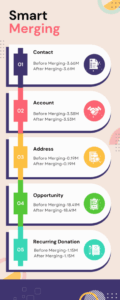
The most significant challenge was scale. Nearly 3.6 million records needed to be processed to identify duplicates accurately. The organization required a solution that ensured data integrity while efficiently managing large volumes of data.
Business Solutions
To overcome these challenges, the organization implemented a structured and automated data management strategy designed to improve accuracy, consistency, and scalability.
Automated Duplicate Identification
An automated system was introduced to detect duplicate contacts using a unique identifier (TAMERID). This significantly reduced manual effort, improved matching accuracy, and ensured duplicates were identified proactively.
Gender-Based Matching Logic
To enhance accuracy, gender was prioritized over DOB during duplicate identification. This approach reduced incorrect matches and strengthened overall data integrity.
First Name Matching for Incomplete Records
For records with missing demographic data, an exact first-name matching rule was applied. This allowed duplicate records to be merged effectively while minimizing the risk of incorrect consolidation.
Master Contact Record Strategy
An automated rule was implemented to designate the oldest contact record as the master record. Retaining the original record preserved historical data and ensured continuity across supporter interactions.
Comprehensive Phone Number Management
A structured phone number strategy was introduced:
-
If the master record already contained phone numbers, additional numbers from duplicate records were stored as inactive.
-
If phone details were missing, numbers from duplicate records were copied to the master record.
This ensured complete and accurate contact information.
Address Standardization
Address formatting rules were applied to prevent unnecessary updates and inconsistencies. For example, addresses written in all capital letters were replaced with properly formatted versions, ensuring uniformity across records.
Orphaned Account Management
After contact merges, the system automatically identified orphaned accounts and merged them with the appropriate master accounts. This prevented unused records from cluttering the database and maintained data completeness.
Related Record Merging
All related interactions, activities, and records associated with duplicate contacts were merged into the master record. This created a unified supporter profile and established a single source of truth for engagement data.
Conclusion
By implementing these structured data management and deduplication strategies, the organization significantly improved the accuracy, consistency, and efficiency of its contact database.
Reducing duplicate records, prioritizing critical data fields, and automating record merging enhanced both operational efficiency and communication effectiveness. These improvements empowered the organization to engage supporters more effectively, strengthen stakeholder relationships, and maximize the impact of its environmental advocacy efforts.